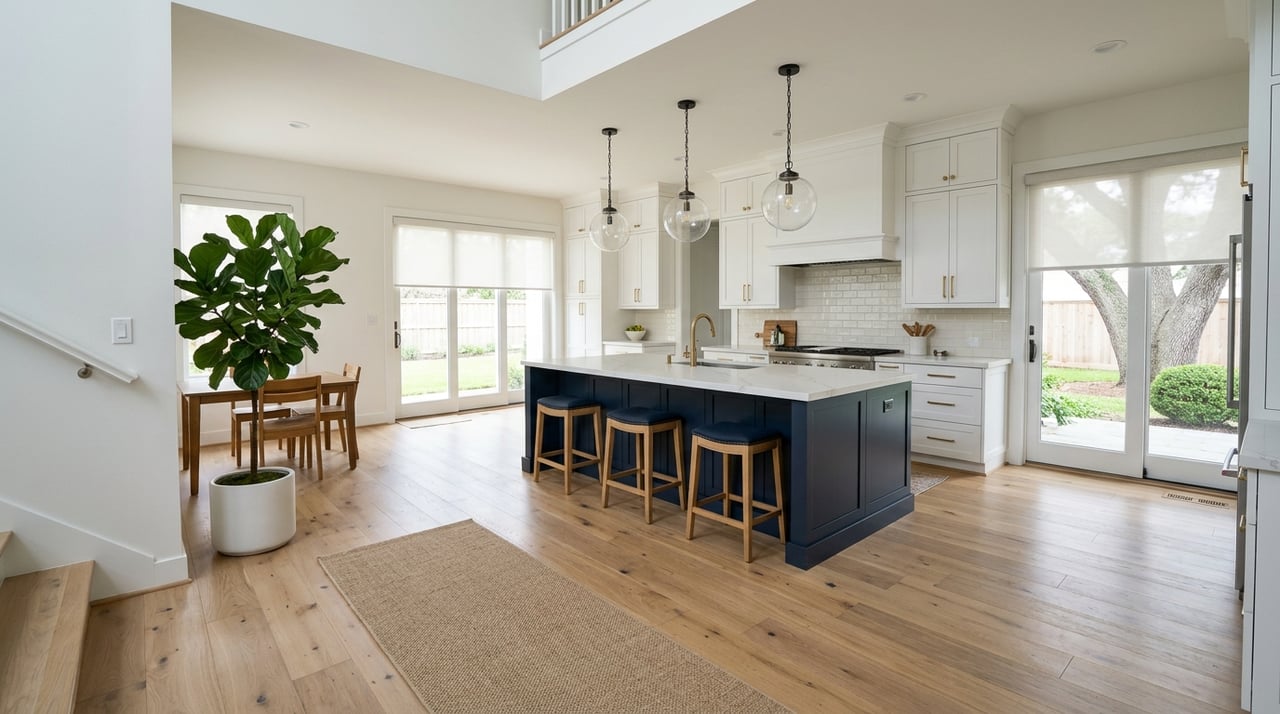
What First-Time Home Buyers in Pearland Should Expect
July 16, 2026
July 16, 2026
Buying your first home in Pearland can feel exciting and overwhelming at the same time. You may be wondering how fast homes move, what your budget should really include, and how to avoid surprises once you are under contract. The good news is that with the right preparation, you can move through the process with more clarity and confidence. Let’s dive in.
Pearland offers a lot of what first-time buyers are looking for in the Greater Houston area: suburban housing, strong commuter access, and a range of price points. According to the city, Pearland is about 20 minutes from downtown Houston, less than 15 minutes from the Texas Medical Center, and less than 10 minutes from Hobby Airport.
That location matters if you want room to spread out without giving up access to major job centers and daily conveniences. Pearland also has a high owner-occupancy rate at 76.2%, which reflects a market where homeownership is a major part of the local housing mix.
If you are buying your first home here, it helps to start with realistic expectations. HAR’s June 2026 update describes Pearland as a seller’s market with 3.2 months of inventory, listings down 7.0% year over year, average days on market at 40.5, and a median sold price of $400,613.
That means you should expect competition, especially for well-priced homes in strong condition. At the same time, homes are not vanishing overnight, so you may still have time to compare options carefully and avoid rushing into the wrong fit.
Detached single-family homes make up most of Pearland’s resale market. In June 2026, HAR reported a median sold price of $389,800 for single-family homes, while the active single-family median was $419,900.
There is also a smaller townhome and condo segment that may work well for buyers looking for a lower entry point or less exterior maintenance. In June 2026, sold pricing for that attached segment was around $255,000, and July 2026 active pricing was around $275,250.
For many first-time buyers, this creates a practical starting question: do you want more space and a yard, or do you want a lower purchase price and potentially simpler upkeep? Your answer will shape not only your home search, but also your financing options and monthly costs.
Before you schedule tours, get clear on what you can comfortably afford. A lender can help estimate your borrowing range, but your real budget should also factor in taxes, insurance, HOA costs if applicable, and your day-to-day financial goals.
A smart early step is to ask at least three lenders for preapproval. Preapproval gives you an estimate of how much you may be able to borrow and what rate you might pay, and sellers often want to see a preapproval letter before accepting an offer.
This stage is also where accuracy matters. Once you are under contract, your lender will use Loan Estimates to compare terms, so giving them correct property tax and HOA information can help your projected monthly payment stay realistic.
One of the biggest first-time buyer mistakes is focusing only on the list price. In Pearland, your monthly ownership cost may look very different from what you first expect once taxes, insurance, and other property-specific costs are added in.
Census QuickFacts lists median selected monthly owner costs with a mortgage in Pearland at $2,611. That number is not a quote for your situation, but it is useful context when you are planning your payment range.
Property taxes are especially important to verify by address. Pearland’s city property tax rate is $0.630 per $100 of valuation, but the total tax bill depends on the exact property because Pearland spans Brazoria, Harris, and Fort Bend counties.
Not every Pearland address falls under the same county or appraisal jurisdiction. Because the city extends across Brazoria, Harris, and Fort Bend counties, two homes that seem similar at first glance can come with different tax and administrative details.
That is why it is important to confirm the county, appraisal district, and any HOA requirements for each property you consider. These details can affect your monthly payment, your paperwork, and even the timeline for certain post-closing steps.
A showing is about more than finishes, paint colors, and kitchen islands. As you tour homes in Pearland, pay attention to the full picture of how the property may function for you day to day.
Here are a few things worth checking closely:
Pearland specifically notes that some flood-prone areas are not obvious on maps because of local drainage issues. That makes property-specific review especially important.
Flood risk is one of the most important issues to understand before you buy in Pearland. The city participates in the National Flood Insurance Program, and federally backed mortgages require flood insurance for homes in Special Flood Hazard Areas.
Just as important, the city notes that standard property insurance does not cover flood damage. Buyers should also know that flood insurance may not take effect until 30 days after purchase, so waiting until the week of closing can create problems.
If a home is in or near a floodplain, you may want to review available survey information or an elevation certificate when relevant. Since some flood-prone areas may not appear clearly on the flood map, relying on the map alone is not enough.
Once you find the right home, the offer stage begins. For most Texas resale purchases involving single-family homes, duplexes, tri-plexes, and four-plexes, the standard form is TREC’s One to Four Family Residential Contract Resale, with the current version effective July 1, 2026.
That contract is commonly used for resale homes, but not for condos or builder homes. If you are considering an attached property, that distinction matters because the paperwork and loan process may look a little different.
In a seller’s market, your offer should be competitive but still grounded in your budget and comfort level. A calm, organized strategy matters more than simply reacting fast.
After an offer is accepted, the inspection period becomes one of your most important windows for due diligence. In Texas, licensed inspectors follow Standards of Practice for one- to four-family dwellings, and TREC defines the inspection as a limited visual survey and basic performance evaluation of accessible systems.
In plain terms, an inspection is not an invasive, top-to-bottom guarantee of every possible issue. It is a professional review designed to help you better understand the home’s current condition.
This is why first-time buyers should plan to inspect promptly after offer acceptance. Once you have the results, you can decide whether to move forward, renegotiate, or walk away based on what you learn.
Closing often sounds intimidating, but the process is very structured. In Texas, the title or escrow agent acts as a neutral third party and checks that the closing documents are complete.
You should also expect to receive your Closing Disclosure at least three business days before closing. That gives you time to review the final numbers and ask questions before you sign.
If your transaction has been well managed from the beginning, closing usually feels less like a scramble and more like a final checkpoint. The key is staying organized and addressing issues as they come up instead of letting them pile up.
Your responsibilities do not end the moment you get the keys. One of the first important post-closing steps for many buyers is reviewing whether you qualify for a homestead exemption once the home becomes your primary residence.
Brazoria Central Appraisal District says homestead exemptions require ownership, primary-residence occupancy, a matching ID address, and an application. In practice, buyers generally apply after closing once they are living in the home as their primary residence.
You will also want to keep records related to your closing, tax information, insurance, HOA details, and any warranties or service schedules for the property. A little organization now can save you stress later.
Buying your first home comes with a lot of moving parts, and Pearland adds a few local layers like varying county jurisdictions, flood considerations, and a competitive seller’s market. That is where experienced guidance can make the process feel much more manageable.
Texas now requires written agreements for brokerage activities with prospective residential buyers before showings or, if no property is shown, before an offer is presented on the buyer’s behalf. TREC also requires key disclosures early in the relationship, and compensation is fully negotiable.
A good buyer’s agent helps coordinate the process from budget planning to tours, inspections, title, and closing. For a first-time buyer, that kind of structure can help you move quickly when needed without skipping the details that protect you.
If you are planning your first home purchase in Pearland, working with someone who knows the Greater Houston market can help you sort through options, understand the tradeoffs, and make a decision with confidence. When you’re ready to take the next step, connect with Kristi Bajjali.
Stay up to date on the latest real estate trends.




Elevating the real estate experience for clients at every stage, from first-time buyers to luxury clientele.